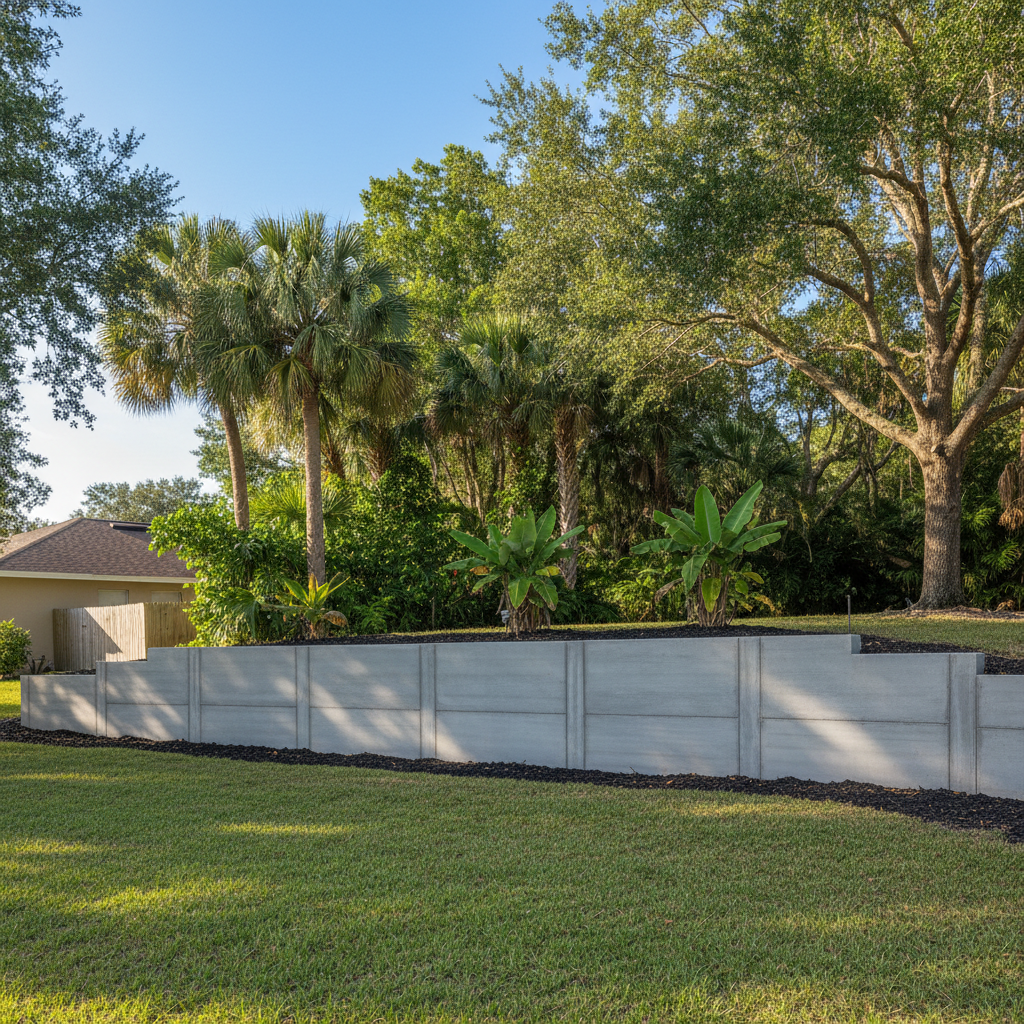
Your Concrete Retaining Wall: Built to Last, But Not Forever Without a Little Help
So, you've got a concrete retaining wall. Maybe it's holding back a slope in your yard, creating a raised garden, or defining a property line. Whatever its job, you probably put money into it because you wanted something strong and durable. And you're right, concrete *is* tough. But 'tough' doesn't mean 'maintenance-free,' especially here in Southwest Florida.
Our climate, with its intense sun, heavy rainy seasons, and sometimes surprising soil movement, really stresses everything outdoors. Your retaining wall is no exception. Think about it: it's constantly battling hydrostatic pressure from saturated soil after a summer downpour, then baking in the sun, and sometimes even dealing with the occasional tropical storm. That's why a little regular attention goes a long way toward keeping it around longer.
What Regular Upkeep Looks Like for Your Wall
Keeping your retaining wall in good shape isn't brain surgery, but it does mean you need to keep an eye on it. Here's what I tell folks:
- Keep it Clean: This sounds simple, but it's really important. Algae, mold, and mildew just love our humid climate. They don't just look bad either; they can trap moisture against the concrete, which isn't great long-term. A simple pressure wash once or twice a year can work wonders. Just be careful not to use too high a pressure setting, especially if your wall has any surface treatments or is already showing signs of wear. Often, a good scrubbing brush with a mild detergent does the trick just as well.
- Check the Drainage: This is probably the single most important thing you can do. Retaining walls are built to hold back soil, but they also need to handle water. Most walls have 'weep holes' or a gravel backfill system to let water escape. If these get clogged with dirt, leaves, or roots, water builds up behind the wall, creating immense pressure. I've seen walls crack and bow because of poor drainage. Make sure those weep holes are clear. If you don't have weep holes, or if you suspect drainage issues, well, that's a red flag.
- Manage Vegetation: Plants are beautiful, sure, but their roots can be incredibly destructive. Keep trees and large shrubs a good distance away from your wall. Even smaller plants growing right up against it can cause problems by trapping moisture or, if their roots get into cracks, expanding and making those cracks worse. Trim back anything that's touching the wall.
- Inspect for Cracks: Walk around your wall regularly, maybe once a month, and just look at it. Are there new cracks? Are old cracks getting bigger? Not every crack is a disaster, but you need to know about them. Hairline cracks are common, especially with our fluctuating temperatures. But wider cracks, or cracks that run horizontally or diagonally for a long distance, are more concerning.
- Seal It Up (Sometimes): For some walls, especially those with decorative finishes, applying a concrete sealer every few years can add an extra layer of protection against moisture, staining, and UV damage. It's not always necessary for every utility wall, but it can definitely extend the aesthetic life and structural integrity of others.
Warning Signs You Can't Ignore
You're not just looking for cracks; you're looking for changes. Here are some serious warning signs that tell you something's just not right:
- Bulging or Leaning: If any section of your wall looks like it's pushing outwards or tilting, that's a major problem. This almost always points to significant hydrostatic pressure or soil movement behind the wall.
- Large or Growing Cracks: I'm talking about cracks wider than a credit card, or any crack that's noticeably getting longer or wider over time. Vertical cracks are often less serious than horizontal or stair-step cracks, but any significant crack needs attention.
- Water Seeping Through the Wall (Not Just Weep Holes): If you see water consistently seeping directly through the concrete itself, rather than draining out of the designed weep holes, it means the wall isn't handling water pressure effectively.
- Displaced Wall Sections: Are blocks or sections of a segmented wall shifting out of alignment? Is the top cap moving? This indicates structural instability.
- Erosion at the Base: If the soil or landscaping at the base of your wall is eroding away, it can undermine the wall's foundation. This is particularly common in areas with sandy soils, like much of Lehigh Acres, where heavy rains can wash away material quickly.
When to Call in the Pros at Prime Time Concrete Lehigh Acres
Look, I'm a big believer in DIY when it's appropriate. But some things are just too important to mess with, and structural issues with a retaining wall definitely fall into that category. If you see any of those major warning signs – bulging, leaning, large cracks, significant displacement, or persistent drainage issues you can't fix – it's time to call in a professional. Don't wait. A small problem can become a huge, expensive repair, or even a safety hazard, if ignored.
A professional like us at Prime Time Concrete Lehigh Acres can assess the situation, figure out the root cause, and recommend the right solution. Sometimes it's a relatively simple fix, like improving drainage. Other times, it might involve more significant repairs or even a partial rebuild. The key is catching it early. We've seen enough retaining walls in Lehigh Acres to know what to look for and how to fix it right, ensuring your wall continues to do its job safely and effectively for years to come.